
Why Stable Table Bases Matter in Commercial Spaces & Hospitality
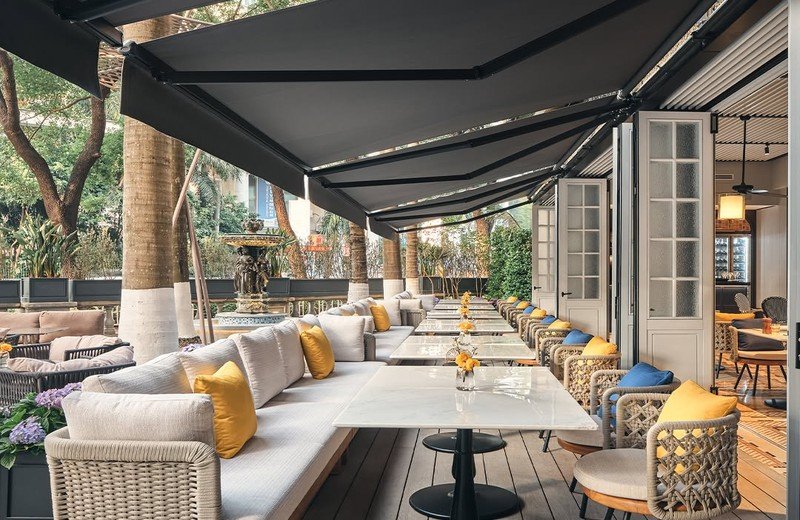
In contract hospitality management, a wobbly table is often perceived as an inevitable minor annoyance solved by folding napkins under table legs. In reality, a wobbly table represents a measurable operational liability that accelerates furniture replacement cycles, induces warranty claims, and causes irreversible damage to brand reputation.
When a table shifts 3 millimeters at its base, that deflection translates to over 15 to 20 millimeters of instability at the surface edge of a standard 720mm dining table. Under hospitality conditions, this results in spilled red wine on banquet upholstery, cracked glassware, and negative online guest reviews.
The 3 Mechanical Failure Modes of Budget Table Bases
Analysis of over 200 failed table bases from warranty audits reveals that instability rarely stems from the floor itself; it stems from material shortcuts taken by budget fabricators:
Sheet Metal Flexing
Thin 1.0mm-1.2mm stamped steel covers flexing under downward patron elbow pressure, permanently deforming the base plate concave.
Welded Seam Fatigue
Rigid spot welds attaching the column directly to the footplate cracking under repetitive lateral kicks from dining patrons.
Stripped Plastic Glides
Friction-fit plastic foot pads snapping off or stripping their thread housing during routine floor dragging and vacuuming.
How CarloJP Solves Wobble Permanently
At our 10,000㎡ manufacturing plant in Shunde, Foshan, every CarloJP commercial table base incorporates three distinct engineering countermeasures to ensure wobble-free performance over a 10-year commercial duty cycle:
1. Massive Gray Iron Castings (ASTM A48 Class 25)
Instead of relying solely on hollow steel covers filled with cheap cement or slag, CarloJP casts high-density gray iron bottom plates ranging from 12.5 kg to 24.5 kg. Gray iron provides high natural vibrational dampening capacity, absorbing kinetic energy whenever a dining patron places down heavy plates or leans on the edge.
2. Continuous Mechanical Tie-Rod Fastening
Rather than spot-welding tubular columns to the bottom plate, our bases utilize a continuous M10 or M12 high-tensile steel threaded rod that passes through the full vertical center of the column. When torqued with heavy-gauge lock washers during assembly, it creates thousands of pounds of continuous axial compression, binding the top spider plate, column, and base casting into a single solid structural unit.
The Tie-Rod Shipping Advantage
Continuous tie-rod construction allows 100% Knock-Down (KD) flat packaging. Columns, base plates, and spiders ship in separate high-density cartons on export pallets, multiplying container loading density by up to 2.5× compared to fully welded table frames.
3. Heavy-Duty M8 Threaded Adjustable Glides
Every prong on our 4-star and square cast iron bases is factory-machined with internal steel M8 threads. We install zinc-plated steel stem glides with high-density synthetic polymer foot pads. Restaurant staff can fine-tune table leveling by up to 15mm with a simple finger twist, compensating for uneven tile, grout lines, or outdoor paver stones without tools.